What are Open & Short Circuits?
The two circuit faults every student and electrician must know. An open circuit is a break with infinite resistance, so no current flows. A short circuit is an unintended zero-resistance path, so a huge current flows. Learn the difference, causes, dangers, protection and testing.
Complete Learning Path — Open & Short Circuits
From the closed circuit, to open vs short, causes, dangers, switches, protection and how to test
What are Open & Short Circuits?
For current to flow, a circuit must be a complete, unbroken loop with a sensible amount of resistance. The two ways this goes wrong are the open circuit and the short circuit — opposite faults with opposite effects.
- Closed (normal) circuit — complete loop, correct resistance, the right current flows and the load works.
- Open circuit — a break in the path (infinite resistance). No current flows, the load is off.
- Short circuit — an unintended zero-resistance path that bypasses the load. A very large current flows.
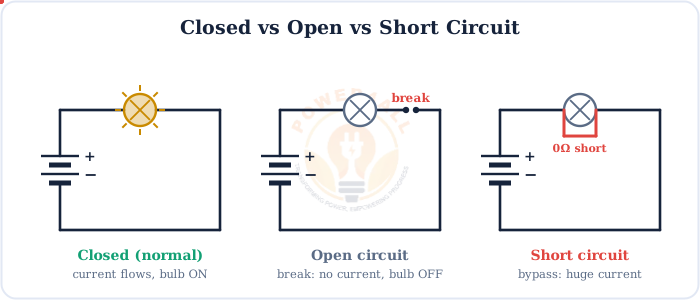
Two opposite extremes
Open = infinite resistance → no current. Short = zero resistance → too much current. Both stop the circuit from working correctly — one by starving it, the other by overwhelming it.
The Open Circuit
An open circuit has a gap in the conducting path. The gap behaves like an infinite resistance, so by Ohm’s law the current is zero — and the full source voltage appears across the break.
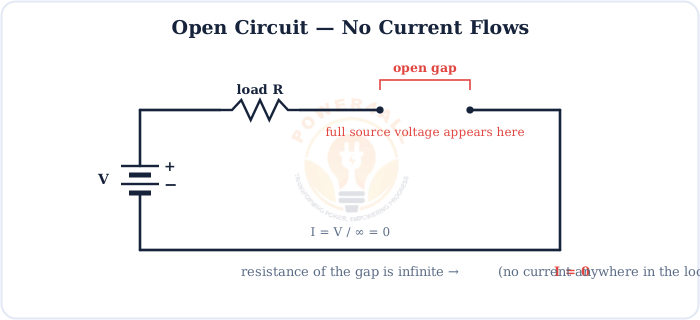
I = V / R = V / ∞ = 0
Infinite gap resistance means zero current in the entire loop
Voltage without current
An open circuit can still be dangerous to touch: there is no current, but the full voltage is present across the break. A switched-off but still-connected mains point is a live open circuit.
The Short Circuit
A short circuit is an accidental path of almost zero resistance that lets current skip past the load. Because R is nearly zero, the current becomes enormous — the classic “dead short”.
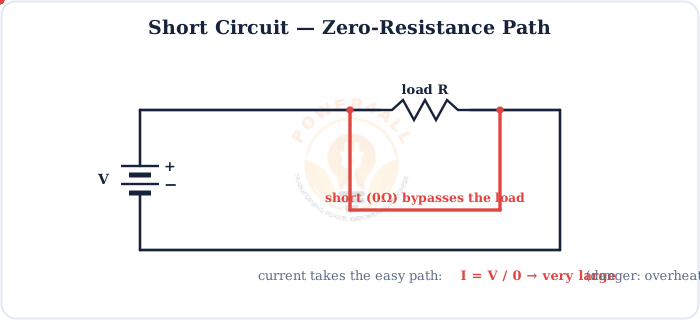
I = V / R, R → 0 ⇒ I → very large
Tiny resistance means a dangerously large short-circuit current
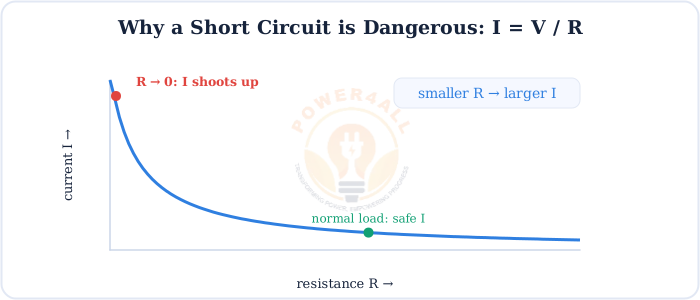
Why shorts are dangerous
Huge current → rapid I²R heating → melted insulation, damaged batteries/supplies and fire risk. Never test a short by touching wires together — always protect with a fuse or breaker.
Open Circuit vs Short Circuit
They are exact opposites — the clearest way to remember them is side by side.
| Property | Open Circuit | Short Circuit |
|---|---|---|
| Path | Broken / incomplete | Extra unwanted path across the load |
| Resistance | Infinite (∞) | Almost zero (0 Ω) |
| Current | Zero (I = 0) | Very large (I = V/0) |
| Voltage across fault | Full source voltage | Almost zero |
| Effect on load | Load off (no power) | Load bypassed; overheating |
| Main danger | Equipment won’t work; live voltage present | Overheating, damage, fire |
| Multimeter (ohms) | Reads ∞ / no continuity | Reads ~0 / continuity beep |
Quick memory hook
Open = OFF (a gap, nothing flows). Short = SURGE (a shortcut, too much flows).
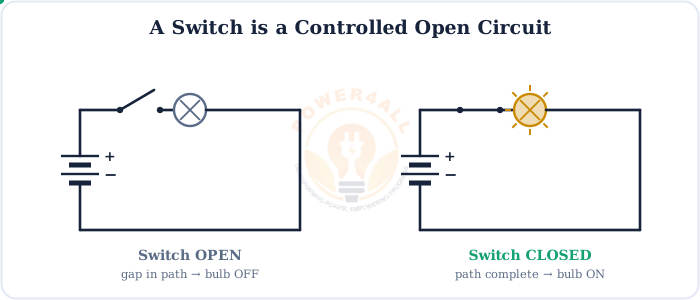
Switches: a Controlled Open Circuit
Every switch is just a deliberate open circuit you can control. Open the switch and you create a gap (off); close it and you complete the loop (on).
A relay is simply a switch operated by an electromagnet — opening and closing a circuit automatically.
Common Causes
Knowing what creates each fault makes it far easier to find and fix.
Open — broken path
Cut/broken wire, loose or corroded connection, cold solder joint, burnt-out component.
Open — interruption
Blown fuse, tripped breaker, or a switch simply left off.
Short — insulation
Damaged, melted or aged insulation letting two conductors touch.
Short — bridging
Water/moisture, loose wire strands, metal debris, or wrong wiring bridging terminals.
Protection Against Short Circuits
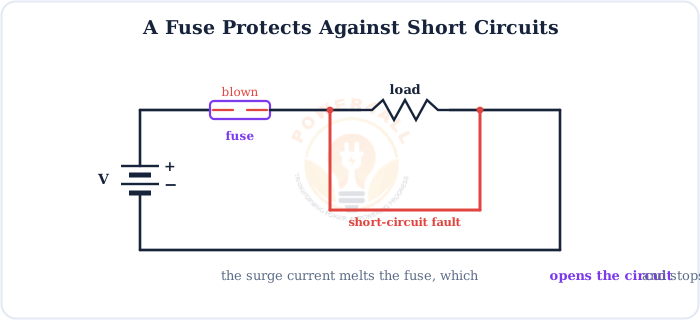
Because a short can draw a dangerous current in milliseconds, circuits are protected by devices that deliberately open the circuit when the current is too high.
Fuse
A thin wire that melts (blows) above its rated current — one-time, then replaced.
Circuit breaker / MCB
Trips open on overcurrent and can be reset — reusable protection.
Correct rating
The protective device must be rated just above the normal load current.
How to Detect Open & Short Circuits
A resistance/continuity test with a multimeter (power OFF) tells them apart instantly.
| Reading (ohms / continuity) | Meaning |
|---|---|
| ∞ / OL / no beep | Open circuit — the path is broken. |
| ~0 Ω / continuous beep (where a load should be) | Short circuit — an unwanted direct path. |
| Expected component value | Healthy — the path and load are fine. |
Practical tip
Always test with the circuit de-energised. Use continuity mode to trace a broken wire (open) and to find where two nodes are unexpectedly connected (short).
Key Terms at a Glance
The essential open/short-circuit vocabulary students and technicians search for.
Open circuit
Broken path, infinite R, I = 0.
Short circuit
Zero-R bypass, I very large.
Closed circuit
Complete loop, normal current flows.
Continuity
A complete low-resistance path (beep).
Fuse / MCB
Opens the circuit on overcurrent.
Dead short
A near-0 Ω short straight across the supply.
Frequently Asked Questions
Quick, expert answers to the questions people ask most about open & short circuits.
What is an open circuit in simple words?
An open circuit is a circuit with a break in it, so the loop is not complete. Because the gap has infinite resistance, no current can flow and the device stays off — like a torch with its switch turned off.
What is a short circuit in simple words?
A short circuit is an accidental low-resistance path that lets current skip the load. With almost no resistance to limit it, the current becomes very large, which overheats wires and can cause a fire.
What is the difference between open and short circuit?
Open = a break, infinite resistance, I = 0, full voltage across the gap. Short = a zero-resistance bypass, very large current, almost no voltage across the short. Open starves the circuit; short overwhelms it.
Does current flow in an open circuit?
No. The infinite resistance of the gap means the current is zero everywhere in the loop. Note the voltage is still present across the break, so it can still be a shock hazard.
Why is a short circuit dangerous?
The current is limited only by the tiny wire resistance, so it can spike to very high values. That causes rapid I²R heating, melted insulation, damaged sources and fire — which is why fuses and breakers exist.
What causes an open circuit?
A broken or cut wire, a loose/corroded connection, a blown fuse, a tripped breaker, a burnt-out component, or a switch left off — anything that interrupts the continuous path.
How does a fuse protect against a short circuit?
A fuse contains a thin wire that melts when the current exceeds its rating. When a short causes a surge, the fuse blows and becomes an open circuit, safely cutting off the current.
How do I test for an open or short with a multimeter?
Turn the power off and use continuity/ohms. Infinite reading (no beep) = open; near-zero reading (continuous beep) where a load should be = short; the expected component value = healthy.
Conclusion & Key Takeaways
Open and short circuits are the two opposite ways a circuit fails — one with too much resistance, the other with too little.
Open = break
Infinite R, I = 0.
Short = bypass
Zero R, huge current.
Voltage vs current
Open: full V, no I. Short: big I, no V.
Switch = open control
Off = open, on = closed.
Shorts are dangerous
Heat & fire — use fuses/MCBs.
Test with ohms
∞ = open, ~0 = short.